
Board climbing is a highly effective training method where climbers challenge themselves on compact, overhanging walls filled with holds—like the MoonBoard, Kilter Board, or Tension Board. This technique is designed to develop finger strength, body tension, precise footwork, and movement skills, all of which directly enhance your bouldering and route performance.
Hey, fellow climber! Have you ever felt stuck on the same old boulder problems or wondered how to break into that next grade without spending endless hours doing gym laps? Training boards like these are your secret weapon. Whether you're aiming for bigger moves on steep terrain or seeking real-world carryover to crags, diving into board climbing will refine your hold matching, core engagement, and tactical beta-reading in ways that regular bouldering simply can't match.
Stick with me as we dive into the details of how to leverage the MoonBoard, Kilter Board, and Tension Board for massive gains in strength, skill, and beyond. You're about to transform your climbing game!
What “board climbing” means (and what makes it different from regular gym bouldering)
Board climbing refers to training on standardized boards, which are often equipped with LED lights and apps like the Tension Board app. These boards feature boulder problems that follow a fixed set of holds, layout, and system that remain identical across gyms worldwide. Typically set at steep angles, these boards use color-coded holds (such as green, blue, red, or yellow) designed for precise progression and global benchmarking.
Standardization: same holds, same layout, same problems
This level of standardization is invaluable because it allows you to track real progress over time. You can compare your sends with climbers from all over the world and rely on a consistent training stimulus. Unlike regular bouldering, where gym routes are reset weekly and problems disappear before you can fully project them, board climbing eliminates this variability.
Board angle, hold ergonomics, and why boards feel “hard”
Board climbing typically forces you to climb on steep angles, often ranging from 40 to 70 degrees. The holds are small, including crimps, pinches, and tiny footholds, all designed with engineered ergonomics. This setup demands maximum body tension and precise hand-foot coordination. As a result, even mid-grade problems can feel exceptionally challenging due to the "style tax" of two-dimensional movement. Unlike gym bouldering, you won’t find slabs, volumes, or easy terrain to ease your climb.
The main types of climbing "boards" (and what each is best for)
Before we dive deeper, let's clarify the taxonomy so you don't confuse three distinct training tools: system boards (like MoonBoard, Kilter Board, and Tension Board), campus boards, and hangboards. Each one trains different qualities and fits at specific stages in your climbing journey.
System boards (MoonBoard / Kilter Board / Tension Board): the board-climbing default
System boards are standardized training boards with fixed or adjustable angles, color-coded holds (green for start holds, blue for foot holds, red for finish holds, and yellow for finish holds), and an app database that illuminates repeatable boulder problems globally. These boards provide a consistent, steep-climbing challenge with precise body tension requirements, making them the core of modern board climbing. Every climb is identical across gyms, every grade is benchmarked against global climbers, and every session contributes to a reliable training record.
Campus board: power and contact strength (high risk if misused)
Campus boards focus purely on upper-body power: hand-only laddering and dynamic jumping between rungs, with zero footwork. This is not a beginner tool. It develops explosive contact strength and shoulder power but places significant strain on your tendons and can reinforce poor movement patterns if your technique isn't solid. Reserve campus boards for intermediate and advanced climbers, and limit use to 1–2 sessions per week as a targeted strength supplement—never as your primary training board.
Hangboard: finger strength (static) rather than movement skill
Hangboards are designed to isolate static finger strength through dead hangs and isometric holds on small holds. They perfectly complement board climbing by building raw grip endurance and lock-off power. However, hangboards don't teach movement, footwork, or the dynamic flow you develop on steep boards. Treat them as a 10–15 minute finishing tool after your main board climbing session, but never as a replacement.
MoonBoard vs Kilter vs Tension: How to Choose the Right Board for Your Goals
Choose your training board by aligning its unique style with your specific priorities. Opt for the MoonBoard if you're aiming to develop fingery power for tackling outdoor boulders. For those prioritizing flowy movement and reduced injury risks—especially if gym competitions or accessibility are key—go for the Kilter Board. If precision, tension, and adjustable challenges are your focus, the Tension Board is the perfect match. Remember to factor in your outdoor climbing style and tendon health to avoid overuse injuries.
Training Emphasis by Board (Power, Tension, Technique, “Friendly” Movement)
The MoonBoard is power-oriented, featuring sharp and oddly-shaped holds that demand finger strength and creative problem-solving. It’s ideal for replicating stiff, outdoor-style climbs.
The Kilter Board excels in user-friendly, flow-oriented movement. With jugs, spans, and dynamic big moves, it helps you build climbing ability across grades without the same level of physical strain.
The Tension Board focuses on pulling power, precision, and body tension. Its symmetrical wood holds require direct and accurate matching on strict hand-foot placements, fostering controlled, deliberate movement.
Angle Options and Difficulty Scaling
The MoonBoard is fixed at an angle of around 40°, offering consistent but limited difficulty. On the other hand, both the Kilter and Tension Boards allow adjustable angles ranging from 20° to 70°. This flexibility lets you scale problems to your needs—steeper angles for power endurance and shallower angles for honing technique. With these adjustable features, one board provides endless progression.
Hold Texture/Skin-Friendliness and Injury Considerations
The MoonBoard features rough plastic holds that can quickly wear out your skin and place a high load on your fingers and elbows due to awkward grips. This limits the duration of training sessions.
The Kilter Board offers ergonomic, skin-friendlier plastic holds along with better LED lighting, which reduces wear and allows for longer training sessions.
The Tension Board uses wood holds, which are the gentlest on skin. These holds allow for larger volumes but still require precise pulls. However, overloading can strain pulleys, so care is needed during intense sessions.
Getting started: setup, rules, and board etiquette
Ready for your first session? Download the app ahead of time, arrive with your climbing shoes on, and ease into the experience by selecting a flashable grade. This helps you avoid feeling overwhelmed while respecting the shared space and ensuring a smoother start.
App basics: connecting, selecting angle, filtering problems, logging attempts
Turn on Bluetooth and pair it to the board (such as Kilter or Tension). Filter climbing problems by grade, stars, repeats, or setter preferences. Tap the bulb icon to light up your selected problem and make sure to log every attempt. Include notes on the angle and beta—tracking your progress consistently transforms vague efforts into data-driven achievements.
Problem rules: start/finish conventions and “no dab” expectations
Rules vary by board, but generally, match both start holds (usually green) and finish holds (red or purple) unless specified otherwise. Follow the lit paths strictly and avoid dabbing intermediate holds. Pay attention to marked areas for feet-only use. For instance, on Kilter boards: green lights indicate start holds, yellow lights mark foot holds, blue lights show hand-foot holds, and purple lights designate finish holds. Example: light up a 6A at 50°, match green starts low, clip blue hand-foot holds mid-route, and top out on purple holds without touching unlit extras.
Shared-board etiquette: turns, fall-zone awareness, and not changing lights mid-climb
Practice patience by waiting for your turn and keeping mats clear of chalk bags and gear—every inch is part of the fall zone. Never walk under climbers and always ask the group before changing lights or angles. If spotting is needed, offer help. Maintaining group consensus on changes ensures a collaborative and safe climbing environment.
Warm-up and session structure (so board climbing doesn’t wreck you)
Board sessions can be tough on your fingers and pulleys, so it's essential to prepare your body with a deliberate warm-up lasting 20–30 minutes. Begin with 2–3 minutes of light cardio, like jumping jacks, followed by joint circles targeting your shoulders, elbows, and wrists. Incorporate dynamic stretches and easy slabs or traverses—aim for 150–200 moves to get your body moving. Finish your warm-up with finger recruitment exercises on a jug edge, performing 3 sets of 5–7-second hangs at 50–70% effort.
When to use boards in your workout
Use the board right after your warm-up and before heavy projecting or other training activities. Boards demand peak freshness, as fatigue increases the risk of injury on small holds. To minimize this risk, tackle board sessions early when your strength and focus are at their highest.
How long a board session should be (and why “more” isn’t better)
Keep power-focused board sessions to 30–45 minutes, aiming for 10–15 problems with 3–5 minutes of rest between each. For endurance or volume sessions, extend this to 60–90 minutes with 20–30 problems and 1–2 minutes of rest between climbs. Going beyond these limits can lead to pump, sloppy form, and overuse injuries. Sticking to these durations ensures high-quality training and faster recovery.
Minimum experience level and beginner guardrails
If you're new to climbing, wait until you can consistently flash V4–V5 gym boulders before incorporating boards into your routine. Beginners often lack the technique required to manage steep tension safely. Start with shallower angles, aim to flash 80% of your chosen problems, and stop immediately if you feel any elbow discomfort. Gradual progression is key to avoiding injuries.
What board climbing actually trains (skills, not just strength)
Beyond just raw power, board climbing hones functional skills that are essential for real rock climbing. These include dynamic finger recruitment during movement, selective body tension for stability, and precise foot engagement. Together, these skills sharpen your entire climbing system, preparing you for the challenges of outdoor climbs.
Finger strength + contact strength under real movement
Boards train your fingers dynamically, not just through static hangs. They force you to latch onto tiny crimps or slopers while shifting your weight. This builds contact strength in a realistic context. Focus on quality, deliberate attempts—pulling perpendicular to holds and arriving controlled without excess momentum. Avoid "junk volume" that leads to sloppy habits; precision is key.
Body tension, hips, and “staying in” on steep terrain
Master the art of staying glued to the wall by clawing foot holds with your hamstrings instead of pushing. Drive your toes down, stack your hips close to the wall, and engage your core, lower back, and shoulders isometrically. Avoid barn-dooring unless intentional, rock your hips over your feet, and twist inward to keep your weight centered. These techniques help you maintain control on steep terrain.
Footwork on small/poor feet and precision under fatigue
When faced with minimal foot holds like smears or edges, boards demand deliberate footwork. This includes precise toe-pointing, heel hooks, and foot flags—even when you're pumped. Such training sharpens your neuromuscular control, ensuring your heels stay down on steep rock. Remember, sloppy footwork can quickly ruin your chances of a successful send.
Board-climbing methods that actually work (pick based on your goal)
Not every climbing session requires limit bouldering. Instead, rotate through various session types to build power, endurance, and technique while avoiding finger burnout or injury. Diversifying your approach can help you progress steadily and safely.
Limit projecting (power): few hard problems, long rests, high quality
Choose 2–4 climbing problems at your absolute limit. Rest for 3–5 minutes between attempts and focus with laser precision on individual moves, micro-beta adjustments, and clean footwork. Prioritize quality over quantity: three solid attempts per problem are more effective than ten sloppy ones. If a hold feels tweaky, stop after three tries to protect your tendons.
Strength-endurance / power-endurance: intervals, circuits, and density blocks
Incorporate timed blocks by working on 4–6 problems at 70–85% intensity for 20–30 minutes, with 1–2 minutes of rest between each attempt. Alternatively, repeat known circuits by attempting the same 4 problems for 4–5 rounds, maintaining tension throughout. You can also try "on-the-minute" efforts, where you complete one problem every 60 seconds for a set duration. Ensure the intensity remains steady and repeatable to build endurance without chasing harder grades unnecessarily.
Technique drills on a board (yes, you can do them)
Practice silent feet by landing each foothold without noise to develop precision and control. Enforce "no-cut" climbs, keeping one foot in contact at all times, which enhances body tension and engages your hips. Work on controlled micro-dynos between static positions, slow-climb at 50% speed with a focus on movement quality, or repeat a single crux move 5–10 times to perfect efficiency.
Angle progression as progressive overload
On adjustable boards like Kilter or Tension, tackle the same problem at progressively steeper angles—starting at 45°, then 55°, and finally 65°. This method scales the load without chasing new grades, offering longer adaptation periods and fostering body awareness across varying angles.
Programming: how to fit board climbing into a week (beginner → advanced)
To structure your weekly board climbing routine, focus on recovery (allowing 48–72 hours between sessions), adjust intensity and volume based on your level, and pair board sessions with complementary workouts like easy bouldering or antagonist strength exercises. Keep it to 2–3 sessions per week to ensure sustainable progress without hitting a plateau.
Beginner board climbers: 1 session/week, moderate intensity, skill-first
Start with one session per week lasting 30–45 minutes. Choose problems that are 1–2 grades below your limit, focusing on shallower angles with jugs and larger foot holds. Drill technique cues like silent feet and stop at the first sign of form breakdown. Follow up with light core exercises to safely reinforce your skills.
Intermediate: 2 sessions/week (one limit, one volume/density)
Plan for two sessions per week, each lasting 45–60 minutes. For example, schedule a limit projecting session on Tuesday and a density circuit session on Friday, ensuring at least two rest days in between. Balance maximum effort with moderate volume to progress without risking overuse. If possible, alternate between different boards and avoid adding hangboard exercises on these days to manage total finger load.
Advanced: 2–3 sessions/week with periodization and deloads
Organize 2–3 sessions per week using periodization . For example, dedicate a power block to limit-focused climbing or an endurance block to circuits, followed by a deload phase of 1–2 weeks at 50% volume every 4–6 weeks. Manage your total workload by incorporating lighter days in between sessions and closely monitoring elbow and shoulder health. Pair this approach with periodized hangboarding every 5–10 days to achieve elite finger strength gains.
Progress tracking: benchmarks, grades, angles, and what to record
Turn your boards into a measurable lab by logging every session, whether in an app or a notebook. Filter for benchmarks, note angles, and review weekly trends. This approach helps you identify real adaptation without getting caught up in individual sends.
Benchmarks: why they matter (and how to use them)
Benchmark sets, such as the community-vetted problems on MoonBoard, serve as objective reference points. These grade-specific benchmarks are invaluable for tracking progress. Test them monthly at the same angle, and log your attempts and conditions honestly. This practice allows you to measure your true progress against global standards.
The metrics that actually show progress
Pay attention to metrics that provide meaningful insights into your growth. These include:
- Attempts-to-send: A decrease from 10 attempts to 3 indicates significant improvement.
- Flashed crux sections: Successfully linking or flashing key sections shows progress.
- Repeatability: Sending a problem 3 times in a row demonstrates consistency.
- Session density: The number of problems completed per minute reveals efficiency.
- Angle upgrades: Progressing to steeper angles is a sign of enhanced capability.
Don't just focus on your peak grade; these metrics reflect your efficiency and consistency.
Board-grade reality check
Board grades often skew 1–3 grades harder than gym bouldering due to their style-specific nature (e.g., crimps, lack of volumes). They can also feel tougher than outdoor climbing, especially without familiarity. For example, Kilter boards may feel softer for dynamic moves, while MoonBoards tend to be stiffer for power. Cross-reference your indoor performance with outdoor sends and remember: perceived difficulty will likely decrease as you adapt.
Injury Prevention and Load Management for Board Climbing
Boards provide an intense stimulus in short bursts. With steep angles, tiny holds, and repetitive finger stress, they can catch you off guard if you ignore the warning signs. To stay healthy and progress quickly, master load management, respect recovery periods, and stop before your form breaks down.
The Big Risk Factors: Intensity, Repetition, Steep Angles, and Poor Warm-Ups
Board climbing places significant stress on your fingers, elbows, and shoulders because you're pushing maximum effort on small holds at steep angles, often repetitively. Skipping warm-ups or increasing intensity too quickly can lead to injuries like ring-finger pulley tweaks, elbow tendinitis, or shoulder impingement. The main culprit is often repeating the same problem or hold type for too many attempts. Follow Josh Wharton's rule: limit yourself to three tries max, then move on. To reduce risks, vary angles, problems, and intensity within your sessions. This spreads the load across different tissues and helps prevent overuse injuries.
Practical Safeguards: Ramp Volume Slowly, Rest Enough, Stop Before You're Trashed
Increase your board climbing sessions gradually—add only one extra session per month, not per week. Allow 24–48 hours of recovery between finger-intensive board days. Limit your sessions to 45–60 minutes to avoid cumulative fatigue, which can compromise your form. If you feel a twinge in your elbows, notice your skin tearing, or your footwork deteriorates, stop immediately. Shift to low-intensity climbing, TRX exercises, or pressing work instead. Additionally, take a full week off from boards each month to allow your bones and tendons to adapt without chronic stress.
Skin and Hold-Texture Management
Proactively file your calluses—rough skin can catch on edges and tear. If you're climbing daily, tape your knuckles or fingers to protect them. Rotate between boards with different hold textures, as rough plastic holds can shred skin faster than wooden ones. Remember, shredded skin can ruin session consistency more than taking a rest day. Prioritize skin care as part of your injury prevention strategy.
Outdoor carryover: making board climbing translate to your real goals
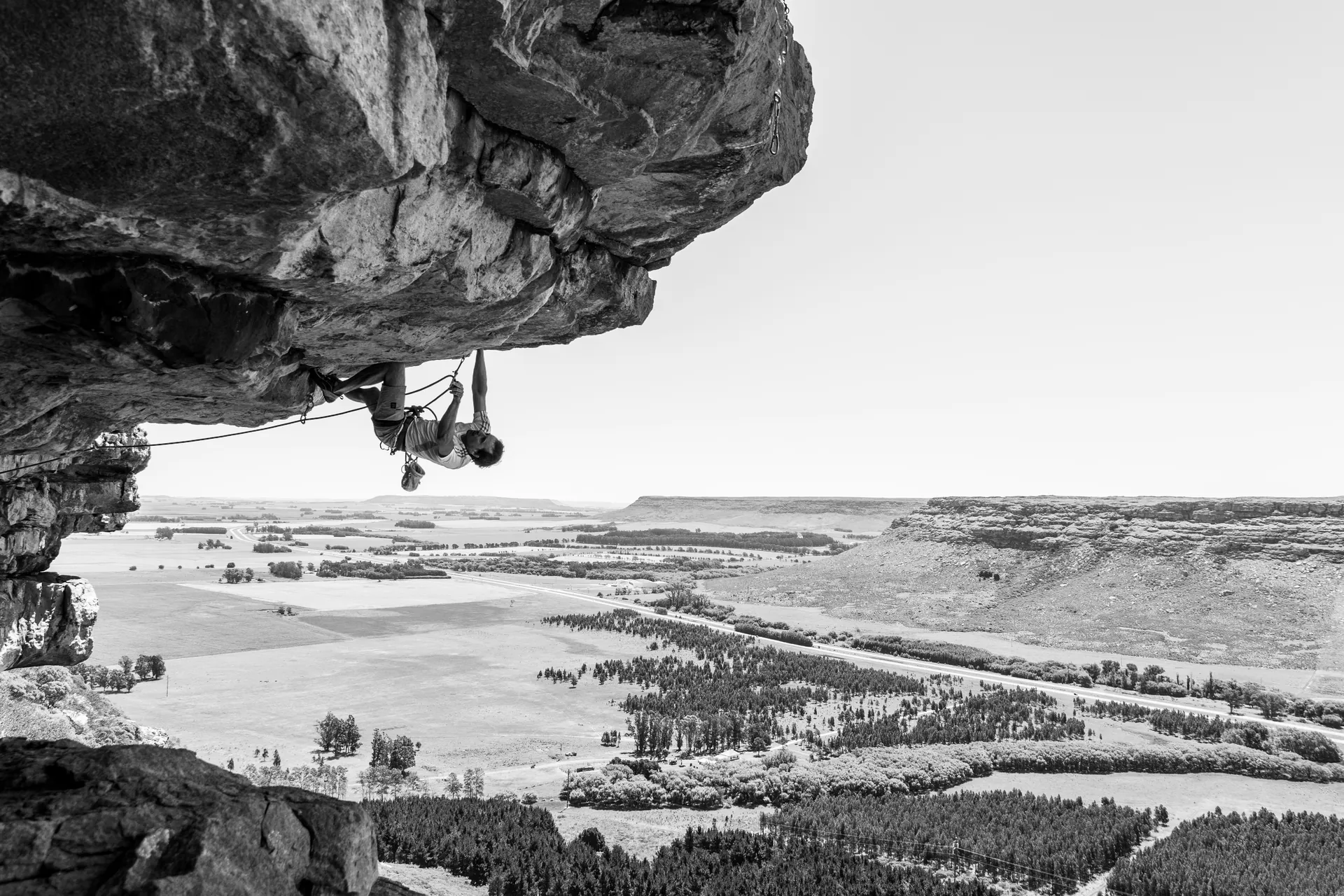
Boards truly shine when tailored to your crag style—steep sport climbers thrive on Tension's precision, while boulderers excel with the power-focused MoonBoard. However, always pair board sessions with outdoor mileage to bridge the gap between 2D walls and the dynamic variability of 3D rock.
Matching board sessions to rock style (steep sport, board-style boulders, compression, etc.)
For steep sport climbing, focus on circuiting power-endurance problems on Kilter boards set at 50–60°, mimicking crux sequences. For board-style boulders, prioritize fingery limit projecting on the MoonBoard. To target compression, utilize a woods board or Tension board with spans and pinches. Choose angles and hold types that closely replicate your project's terrain and movement demands.
What boards don’t train well (and how to cover the gaps)
Boards are not ideal for training slabs (which require dedicated easy-angle sessions), crack jamming (better practiced in trad-specific settings), or varied rock textures like slopers or crystals. Address these gaps by spending 20–40% of your time on real rock or gym volumes. Complement this with technique drills, such as mirror imaging problems, to build bilateral efficiency and avoid "front-wheel drive" arm-dominant habits.
Using board climbing to build confidence and consistency
Repeatable board problems allow you to refine execution under fatigue, turning shaky cruxes into autopilot sequences. This boosts your "try-hard" reliability on projects, building mental toughness for redpoint pressure. Precise body tension and footwork learned on boards directly carry over to sending outdoors.
Optional: Building or Installing a Home Board (What Actually Matters)
If gym access is inconsistent and you're eager for reliable board climbing sessions at home, creating a DIY training board or angle board can provide unlimited opportunities. However, always prioritize safety over speed—an improperly constructed setup could lead to serious injuries.
Space, Angle, and Landing Zone
Ensure you have a minimum of 8ft width and 10–12ft height (2.4–3.6m ceiling clearance) for full-size boards like Tension clones. Aim for a 35–45° angle, with steeper angles suited for advanced climbers. Cover the entire fall zone with thick mats or stacked crash pads extending at least 6ft out—avoid bare floors or thin yoga mats, as they do not provide adequate protection.
System Choice: Fixed vs Adjustable, LED Ecosystems, and Maintenance
Fixed boards, such as Moonboard replicas, are simpler and more cost-effective. These typically involve a plywood frame with T-nuts and are secured into studs or joists. Adjustable boards, featuring hinged panels with winch or hoist mechanisms (like Tension boards), offer greater versatility for progression but come with increased complexity. Skip LED setups unless you're tech-savvy enough for app integration. For outdoor use, opt for marine-grade plywood and stainless steel hardware to ensure durability. Always test stability with bodyweight pulls before fully utilizing your board.
Conclusion
Mastering board climbing on MoonBoard, Kilter, or Tension is a powerful way to develop essential climbing skills such as finger strength, body tension, precise footwork, and effective problem-solving. These skills are key to advancing your bouldering and climbing routes. To maximize your progress, track your benchmarks, manage your load intelligently, and align your training sessions with your outdoor climbing goals for unmatched carryover.
Always remember to warm up thoroughly, focus on quality over volume, rotate your training methods weekly, and include a monthly deload period to avoid injuries and ensure sustainable progress.
Now, grab your climbing shoes, hit the board this week, refine your technique, and watch your performance at the crag soar. With consistency, you can turn your potential into incredible power!