

Early life and the path from youth comps to outdoor mastery
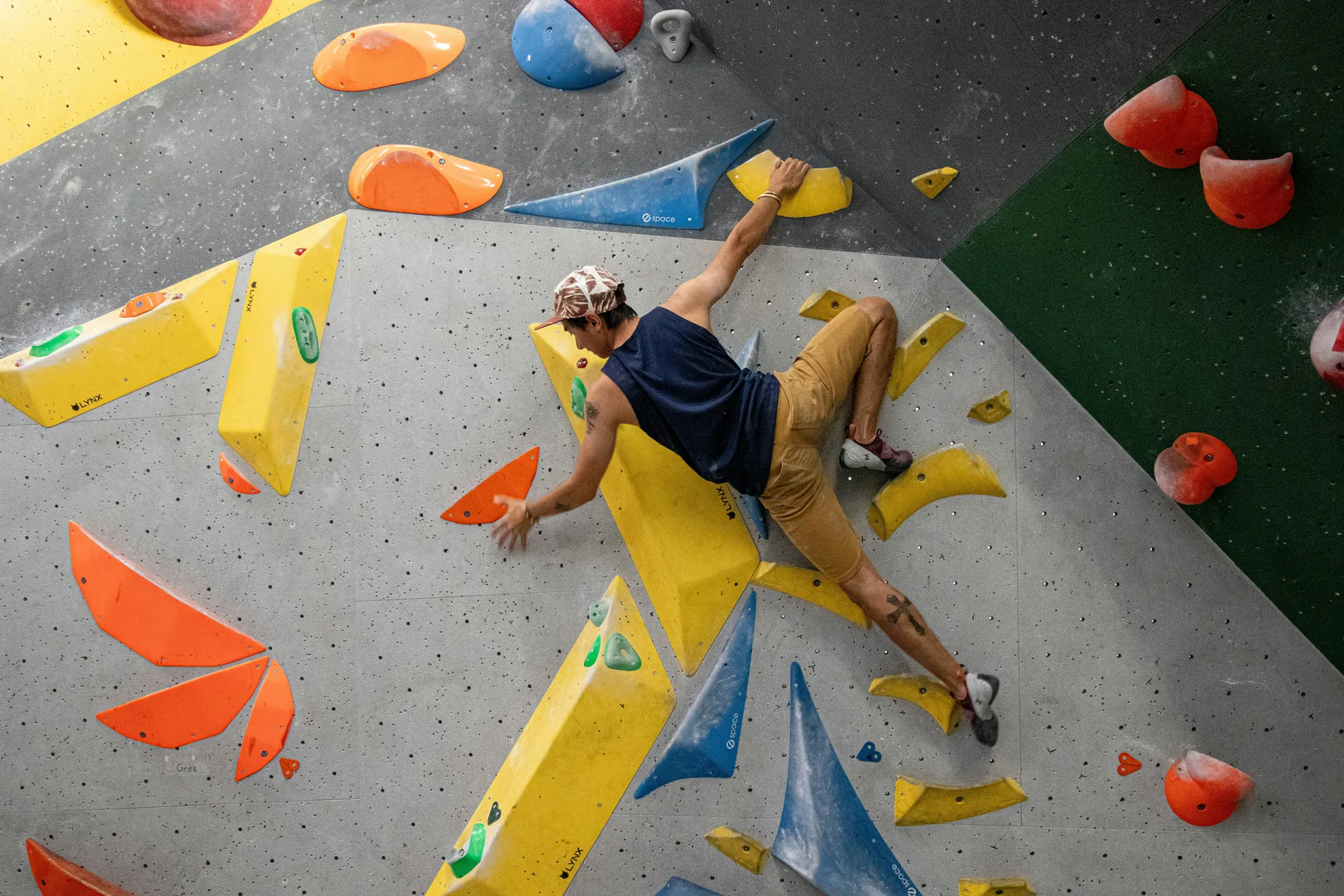 Daniel Woods was born in Richardson, Texas, on August 1, 1989, and discovered climbing at age 5 during a family trip to Mineral Wells State Park with his father, sparking his passion for the sport. By 1997, at age 8, his family relocated to Longmont, Colorado, where he joined the Boulder Rock Club junior climbing team under coaches Justin Sjong and Jimmie Redo, transitioning from casual gym sessions in Dallas to structured training and local crags.
Getting into climbing and early progression
Reader, Woods quickly progressed from gym climbing to outdoor bouldering, sending his first V11 (*Fuck You Finger*) at age 14 in 2003, followed by the first ascent of *Echale* (V14) a year later at 15 in Clear Creek Canyon, showcasing his rapid development in Colorado's Front Range areas .
Junior competition foundation
His junior team experience honed movement efficiency, mental resilience under pressure, and limit-pushing skills, laying the groundwork for his dominance in competitions like the American Bouldering Series Nationals, where he later claimed 9 titles .
Transition to full-time outdoor focus
As Woods turned professional in his mid-teens, he shifted from comp lead climbing to elite outdoor bouldering, embracing extended projecting sessions, weather-dependent conditions, skin management, and global travel to spots like Rocky Mountain National Park and Bishop, USA, which demanded adaptability beyond indoor precision .
Competition career highlights (why his comp resume still matters)
Reader, Daniel Woods dominated competitions throughout his career, securing 9 American Bouldering Series National Championships from 2004-2014 and becoming the first American to win an IFSC Bouldering World Cup gold in Vail in June 2010, with additional podiums like silver in Eindhoven, demonstrating technical precision and mental fortitude that translate directly to his outdoor projecting .
Major titles and standout seasons
His standout achievements include 8-10 consecutive ABS National wins starting at age 16 in 2005, two golds and multiple podiums at USA Climbing National Championships, and the historic 2010 Vail World Cup victory, marking him as America's most successful boulderer alongside Alex Puccio .
What his comp climbing reveals about his strengths
Woods' comp success highlights his exceptional coordination, rapid pace on problems, and ability to mentally reset between attempts under pressure, skills that fueled his efficiency on multi-session outdoor boulders like V16s and V17s .
Why he stepped back from comps
After his final international event at the 2017 Meiringen World Cup (45th place), Woods shifted focus to outdoor bouldering and sport climbing due to training specificity needs, extensive travel for projecting, and prioritizing long-term health over the comp circuit's demands .
Notable outdoor ascents and first ascents
Reader, Daniel Woods has redefined bouldering limits through dozens of landmark first ascents across eras and grades, from V14s in his teens to proposed V17s today, establishing benchmarks that influence route-setting, training, and the global perception of what's possible on rock .
Landmark first ascents that shaped modern bouldering
At 15, Woods established *Echale* (V14/8B+) in Clear Creek Canyon, Colorado's hardest boulder then, pioneering steep overhangs with compression moves that set a youth standard. In Rocky Mountain National Park's Chaos Canyon, his 2007 first ascent of *Jade* (proposed V15/8C, later V14/8B+) marked his hardest send after years of projecting alongside Dave Graham, influencing highball ethics and persistence. *The Game* (V15/8C) in Boulder in February 2010, after 17 sessions, pushed power-endurance boundaries with dynamic slopers, while *Paint it Black* (V15) in RMNP in February 2012 introduced desperate, tension-heavy lines in alpine granite.
Monkey Wedding (V15) in Rocklands, South Africa, in August 2012 showcased his international FA prowess on egg-shaped holds .
The hardest-tier ascents and grade milestones
In bouldering, grade milestones like V15/8C or V16/8C+ represent consensus frontiers where few repeats confirm rarity, with Woods hitting multiple: *Sleepwalker* low start extension *Return of the Sleepwalker* (proposed V17/9A) in Red Rocks, March 2021, as only the second-ever claim at that grade, and *Grand Illusion* (V16/8C+) third ascent in Little Cottonwood Canyon, June 2021, solidifying his elite status amid debates.
Iconic repeats and international ticks
Woods' repeats like *Off the Wagon Low* (V16/8C+, third ascent) in Val Bavona, Switzerland, March 2020, and 40+ V15s/8Cs worldwide build credibility by validating others' FAs, while trips to Bishop, USA (*Process*), South Africa (27 boulders including 3x V15s in 2018), and Chironico (*Big Paw*) demonstrate versatile adaptation across sandstone, granite, and gneiss .
Sport climbing highlights (as supporting evidence of range)
Beyond bouldering, Woods climbed *La Capella* (5.15b) in Siurana, Spain, in 2018, joining an elite group under 20 worldwide, plus other 5.15as, revealing his power-endurance, tactical sequencing, and headspace for sustained cruxes .
Projecting philosophy: how Daniel Woods approaches hard boulders
Reader, Woods treats projecting as a deliberate craft, selecting lines that demand years of refinement to perfect inefficient movement into fluid efficiency, turning impossible cruxes into repeatable sends through micro-adjustments and mental belief .
Picking a project: why some lines are worth years
He chooses boulders for their uniqueness—like uncompromising styles or historical significance—personal body fit, optimal conditions potential, and intrinsic motivation that sustains multi-year efforts, as with *The Bubble Wrap Project* after five years of top climbers failing .
Building moves: sequence discovery, micro-beta, and efficiency
Woods isolates cruxes to discover sequences, refines micro-beta through endless repetition (watching old vs. new videos reveals distilled body positions), then links and polishes for economy, emphasizing hand strength on rock above all .
Conditions management: skin, humidity, temperature, and timing
Elite projecting hinges on perfect friction—Woods times sessions for low humidity, ideal temps (like night sends for *The Process* with 6 degrees and 25 pads), manages skin meticulously, and travels globally to chase windows that enable high-output days .
Attempt strategy: "good tries" vs "junk tries"
He prioritizes quality "good tries" with proper warm-up and rest intervals to build confidence, avoiding "junk tries" that fatigue tendons or disrupt rhythm, stopping when recovery lags to protect long-term performance .
Training methods and performance traits behind his climbing
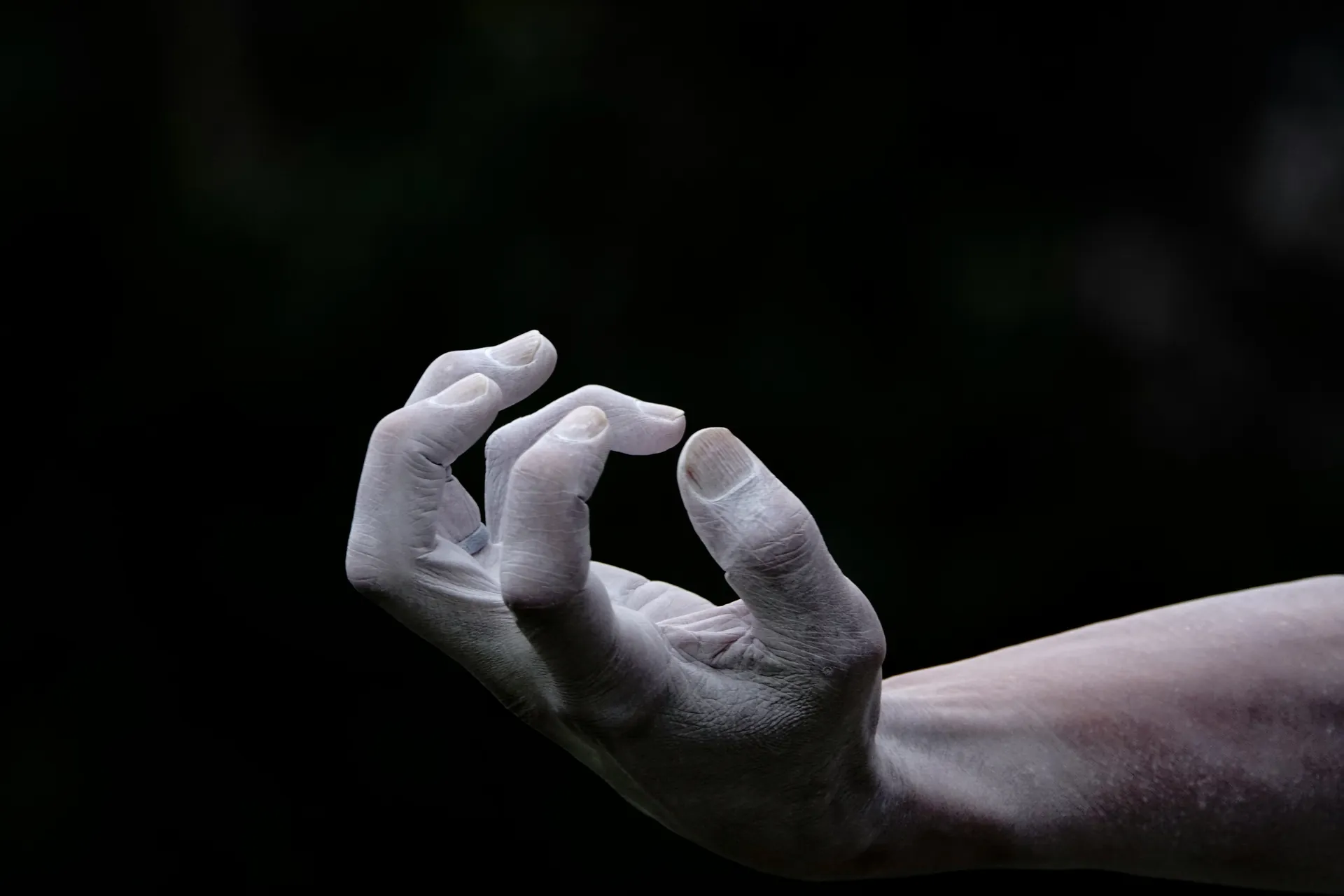
Reader, Woods' regimen emphasizes power sessions with boulder circuits, campus boarding, and functional CrossFit-style workouts to build the durability for his steep, intense style, balancing high-intensity days with recovery to avoid burnout.
Finger strength and contact power
He prioritizes grip and pulling power through 2-hour sessions of 10 pre-solved boulders (half 8A, half 8A+/8B+), campus reaches (max height 3x per side), and 4x4s—four V8-ish problems x4 sets with 1-min rests—to develop explosive contact strength for dynos and small holds .
Core tension and steep-terrain efficiency
Core engagement via "DW Specials" (Burpee suicides every 30s), sit-ups during campus rests, and sustained intervals on steep walls (no shaking, constant movement) maintains body tension, hip drive, and foot precision to minimize energy waste on overhangs .
Power-endurance for boulders with many hard moves
For long cruxes requiring power-endurance, he uses circuits (20-move laps to failure), 4x4x4s (16 problems/group x3-4 groups), and sustained bouldering (7-move repeats x6 with 30s rests) to mimic multi-move boulders that act like short routes.
Injury risk management for high-intensity bouldering
Woods monitors load progression (stop at 2 hours if regressing), enforces full recovery (lie down, stretch forearms), rests when rundown, and alternates intensities to protect fingers/elbows, learning from overtraining that mental fatigue precedes physical breakdown .
Headspace: fear, highballs, and performance under pressure
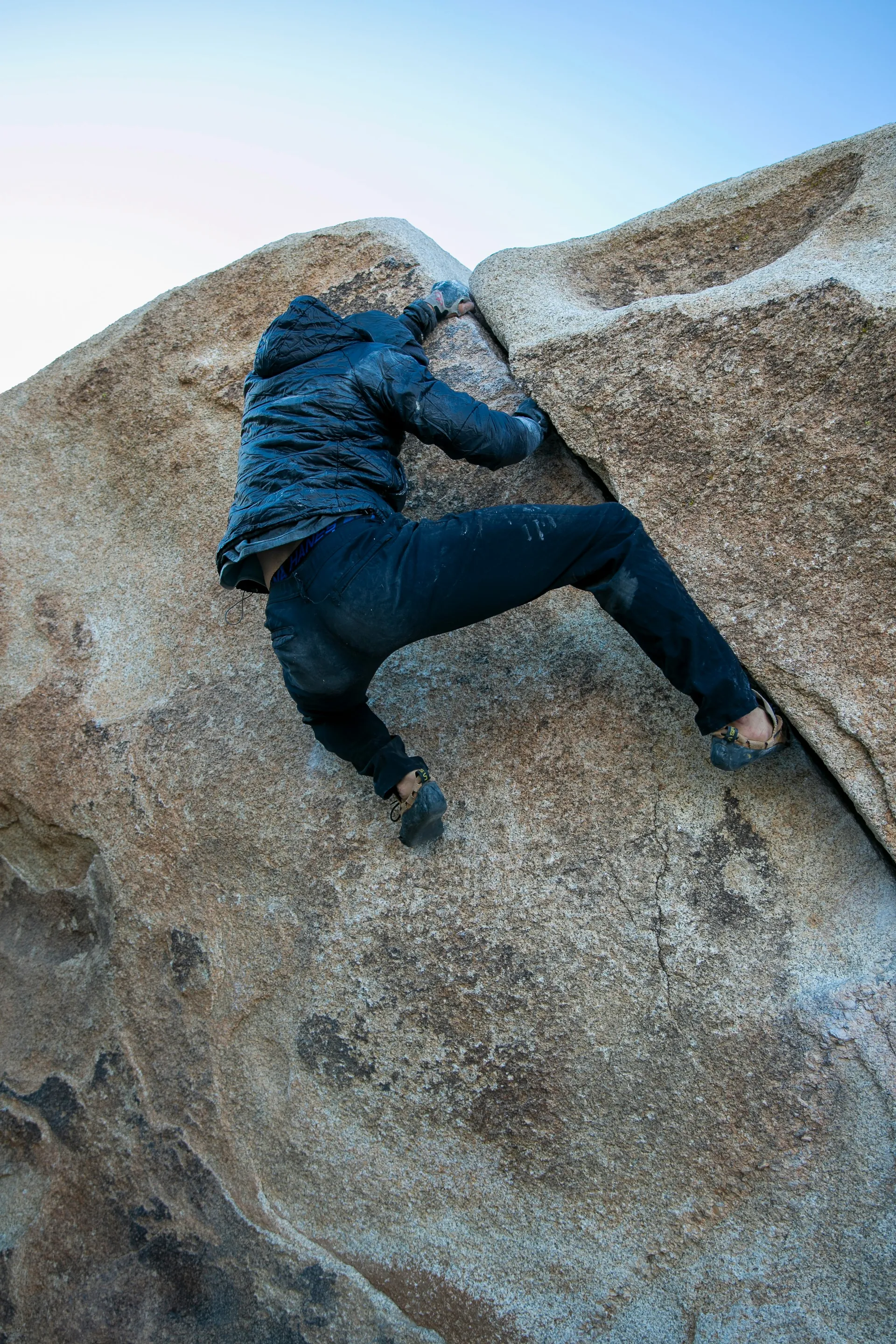
Reader, Woods masters mental game through deliberate risk assessment and composure rituals, turning fear into focus on highballs and cruxes alike, sustaining elite performance over two decades .
Highball decision-making and risk management
He evaluates highballs by bail potential (downclimb or jump safety), padding/spotter setup, personal consequences, and state of mind—opting out if fatigued or conditions demand excessive prep, as with early V14 highball projects requiring pads and spotters for safe laps.
Managing doubt on send goes
On redpoint burns, Woods employs deep breathing to stay relaxed, visualization of sequences, cue words for focus, and full commitment to the planned line, overriding hesitation to execute precisely under pressure like on *The Process*.
Consistency: staying elite across decades
Longevity stems from structured 4-week training blocks with deloads, recovery discipline (sleep, nutrition), and motivation from new projects or travel, cycling intensity to maintain peak output from age 15 to 35+.
Controversies and discussions people search for (grades, style, comparisons)
Reader, Woods' ascents often spark debates on grades and legacy, but understanding the process—first-ascents set proposals, repeats refine consensus—helps contextualize without fueling drama .
How bouldering grades evolve after first ascents
Proposed grades like Woods' V16 for *The Game* (later V15 by repeaters) or V16 for *Creature from the Black Lagoon* shift downward with familiarity, conditions knowledge, and multiple sends, as first-ascents inflate due to unknowns while consensus stabilizes over time .
What "best boulderer" comparisons miss
Rankings overlook style biases (steep power vs. slabs), era gaps (early 2010s Woods dominance vs. today's field like Cameroni or Raboutou), and metrics like total volume (his 22+ V15s), peak grades, or cultural impact over single sends .
Transparency and how ascents are documented
Woods documents via videos (e.g., *Sleepwalker* sit with photographer JP Melville), witness accounts from peers like Dave Graham, and social posts detailing sessions, enabling community validation amid sparse repeats for ultra-hard lines .
Media, films, and influence on modern climbing culture
Reader, Woods amplifies his legacy through compelling media that showcases raw projecting and inspires a generation, while shaping pro climbing's professional landscape .
Major film and video appearances
Featured in *The Collective* (2007) revealing early mastery, *Progression* (2012) documenting *The Process* ascent in Bishop, USA, long-form edits like *Thor’s Hammer* and *Creature from the Black Lagoon* sessions, plus training clips from Teva Mountain Games and his YouTube channel that break down beta and mindset .
Influence on training, standards, and aspiring boulderers
His multi-year projects and V16/V17 milestones elevated expectations for persistence and power-endurance, influencing gym programming, coaching (e.g., junior climbing team pathways), and what young climbers view as achievable through structured skin/conditions management .
Sponsors, partnerships, and professional climbing as a career
Backed by FrictionLabs, La Sportiva, and others since his gold medal Vail Cup wins, Woods balances sponsorships with travel-heavy schedules (South Africa, Spain), content creation, and coaching, exemplifying pro climbing's blend of competition, FAs, and media for sustainable income .
Conclusion
Reader, Daniel Woods stands as bouldering's enduring icon —from junior comp dominance and 9 ABS Nationals to landmark FAs like *Sleepwalker* (V16), *The Process*, and *Creature from the Black Lagoon* in Rocky Mountain National Park. His projecting philosophy, finger strength training, and mental resilience redefined hard boulders, influencing standards worldwide.
Essential takeaways: prioritize conditions, refine micro-beta, manage risk deliberately. Whether you're eyeing your next V10 or dreaming of Paul Robinson-level sends, study Woods' efficiency— grab your shoes, hit the crag, and project smarter today (98 words).